Kiev Thermal Plant Said to Be "Gone" in New Post-"Truce" Strikes, + Detailed BDA Analysis
With a lack of any better developing stories, let us again do a quick frontline update, particularly because only hours after the last update Russian forces had again advanced to capture several new settlements.
We last left off in the Zaporozhye region where the most traction has been generated of late. Last time Russia had just captured Sviatopetrovka (circled in yellow below), and now they have captured neighboring Staroukrainka (circled in red) only a couple days later—obligatory capture video from the MOD:
Assault troops of the 114th Guards Motor Rifle Regiment of the 127th Motor Rifle Divisiontook the village of Staroukrainka in the Zaporizhia region.
The “Far Eastern Express” is heading towards Orekhov.
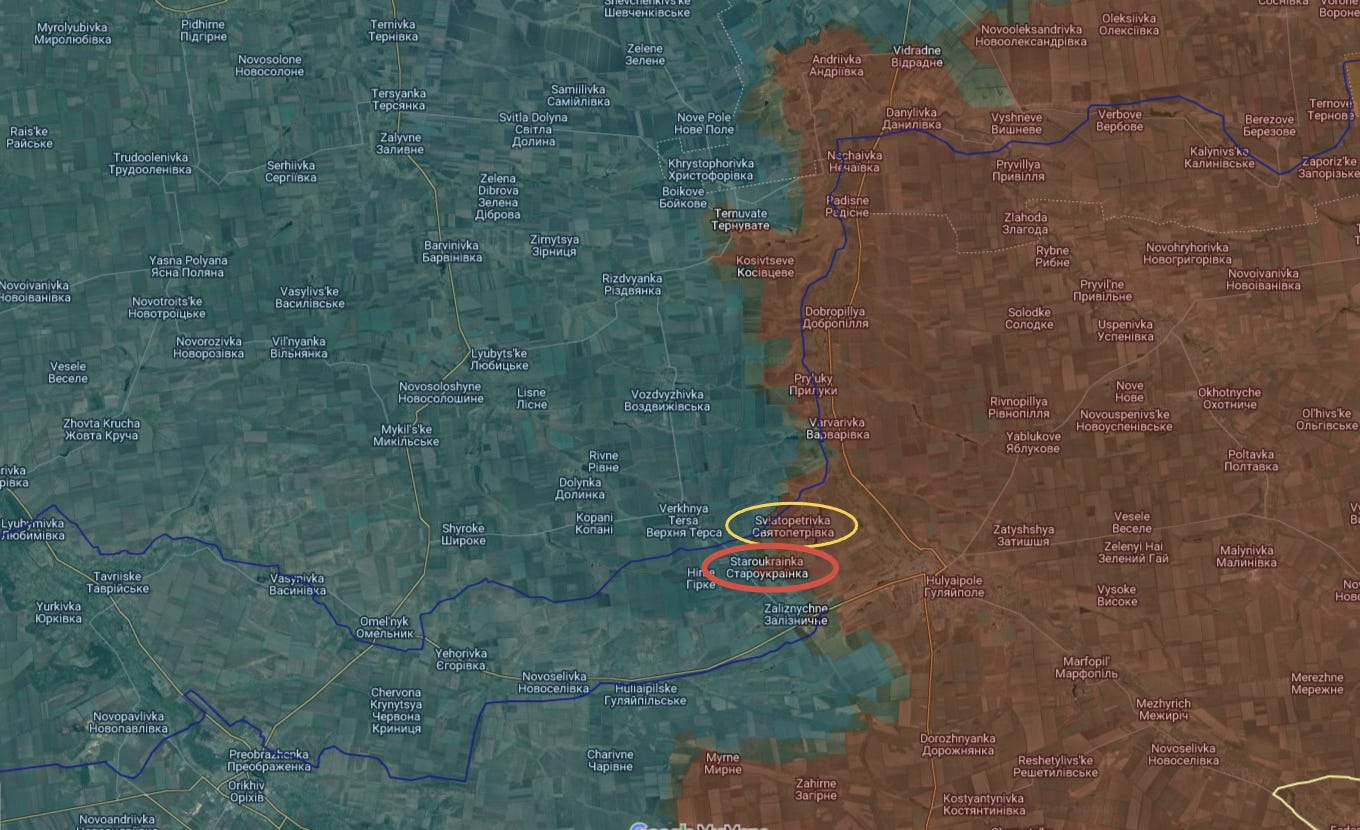
Some fields were captured south of Staroukrainka also, slowly enveloping the neighboring settlement of Zalizhnychne.
Likewise, just north of there last time Russian forces had captured most of Ternuvate. Now they have captured adjacent Prydorozhne, though some mappers—as can be seen below—don’t yet have all of Ternuvate taken as of yet:
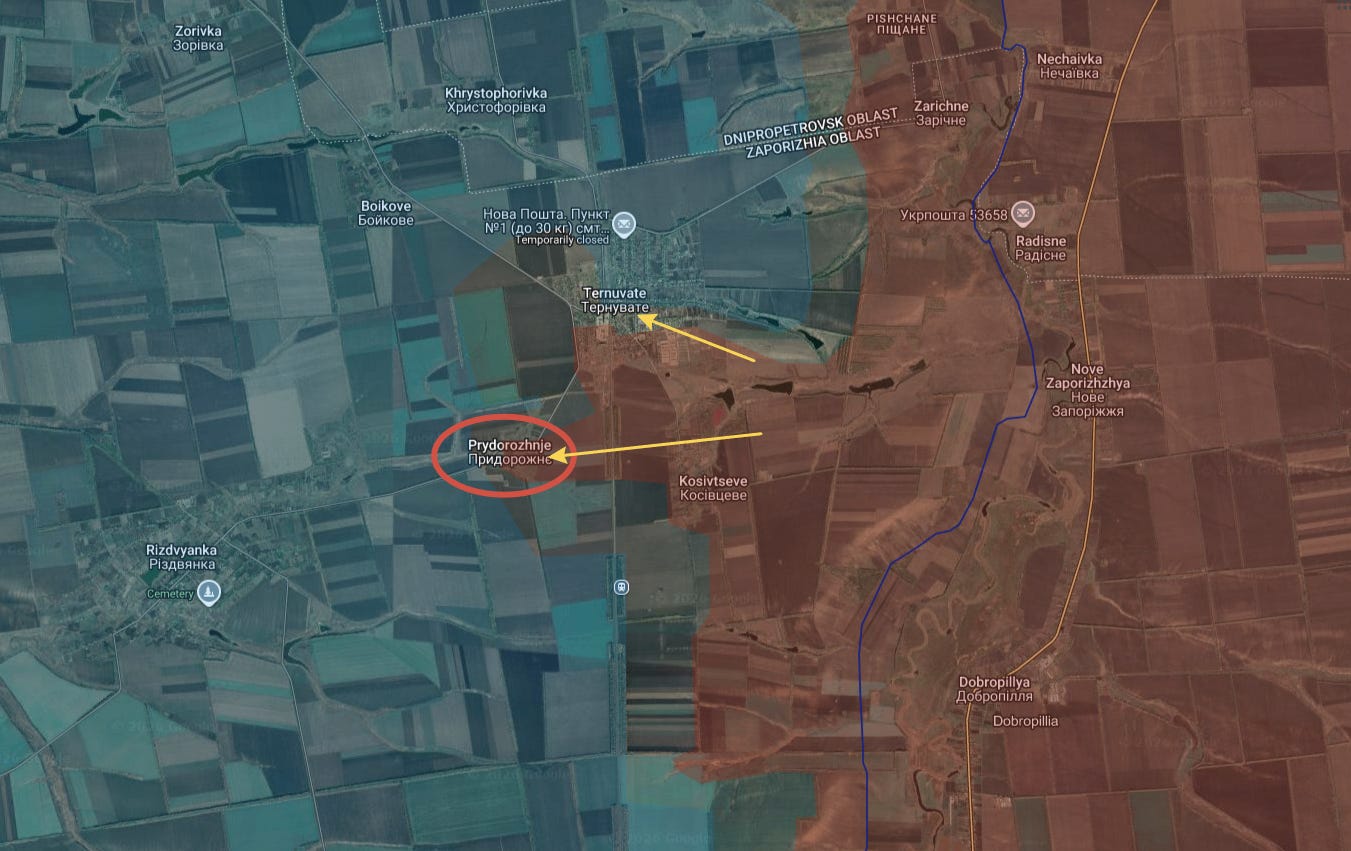
Essentially what this means is that the Eastern Express operating on this front has apparently restarted operations and is beginning to reach advancement rates similar to those before the holiday “hiatus”—as I’ll call it—of the past month and change.
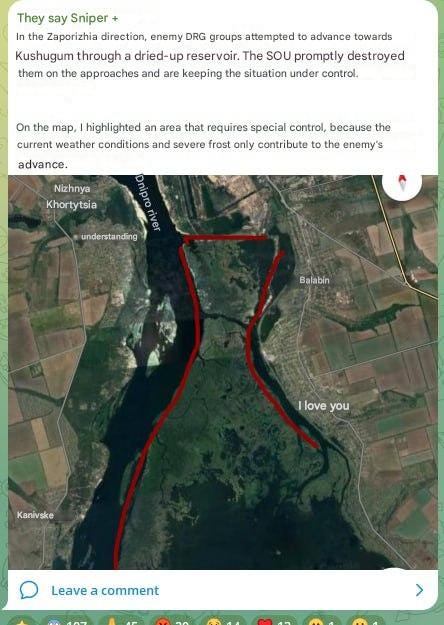
On the western side of Zaporozhye region, Ukrainian reports claimed that Russian DRGs are operating along the Dnepr river almost up to Zaporozhye city itself:
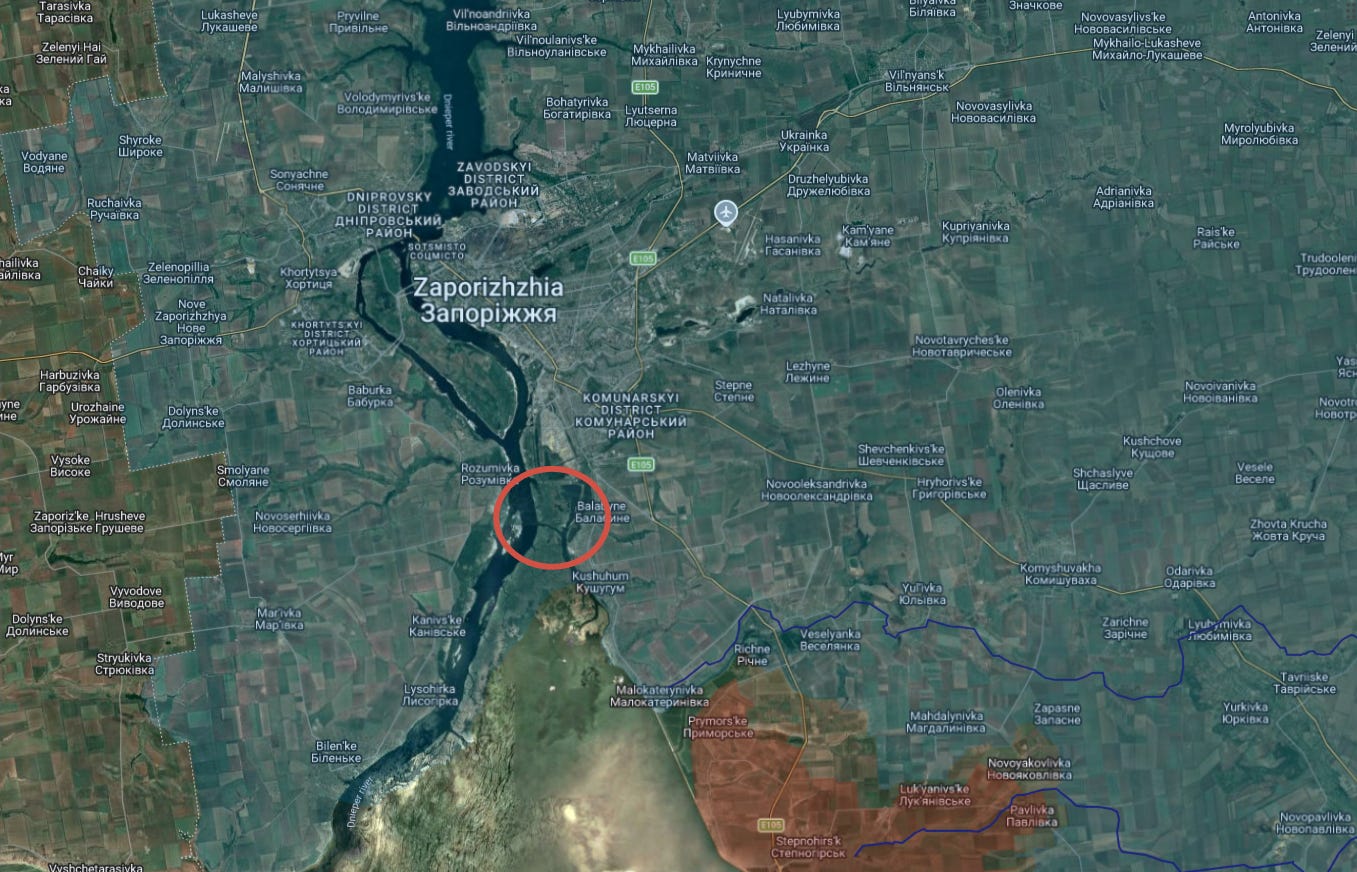
For reference, this is how far that is from the current Russian line there:
Most of the other front lines have not quite yet resumed previous advancement rates, but they appear to be slowly coming back to life.
On the Seversk line, Russian forces are pushing the entire wall westward toward Slavyansk. The circled areas saw advances westward—in particular the area between Nykyforovka and Pryvillya below—with the yellow circle showing Novomarkove which was taken a week or two ago:
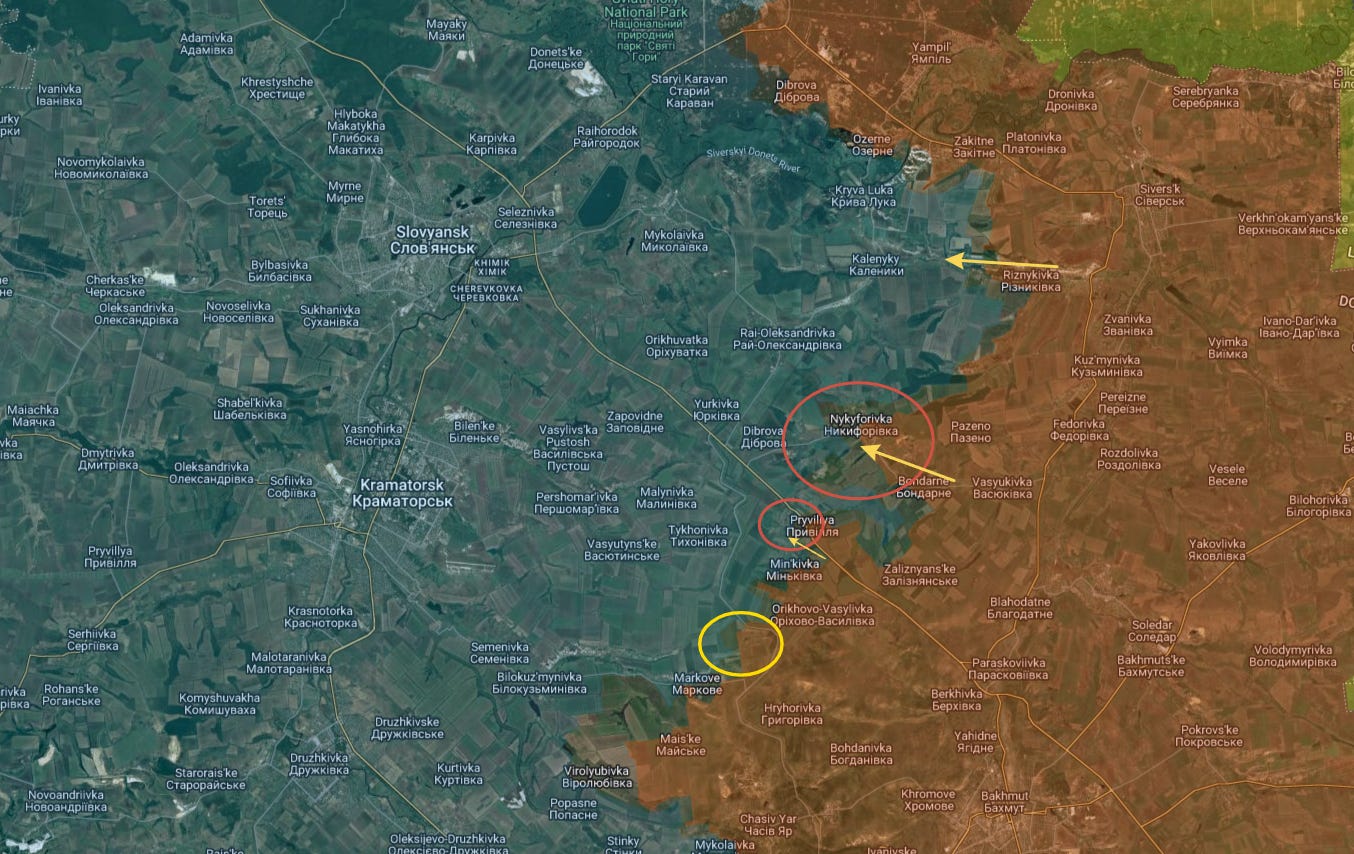
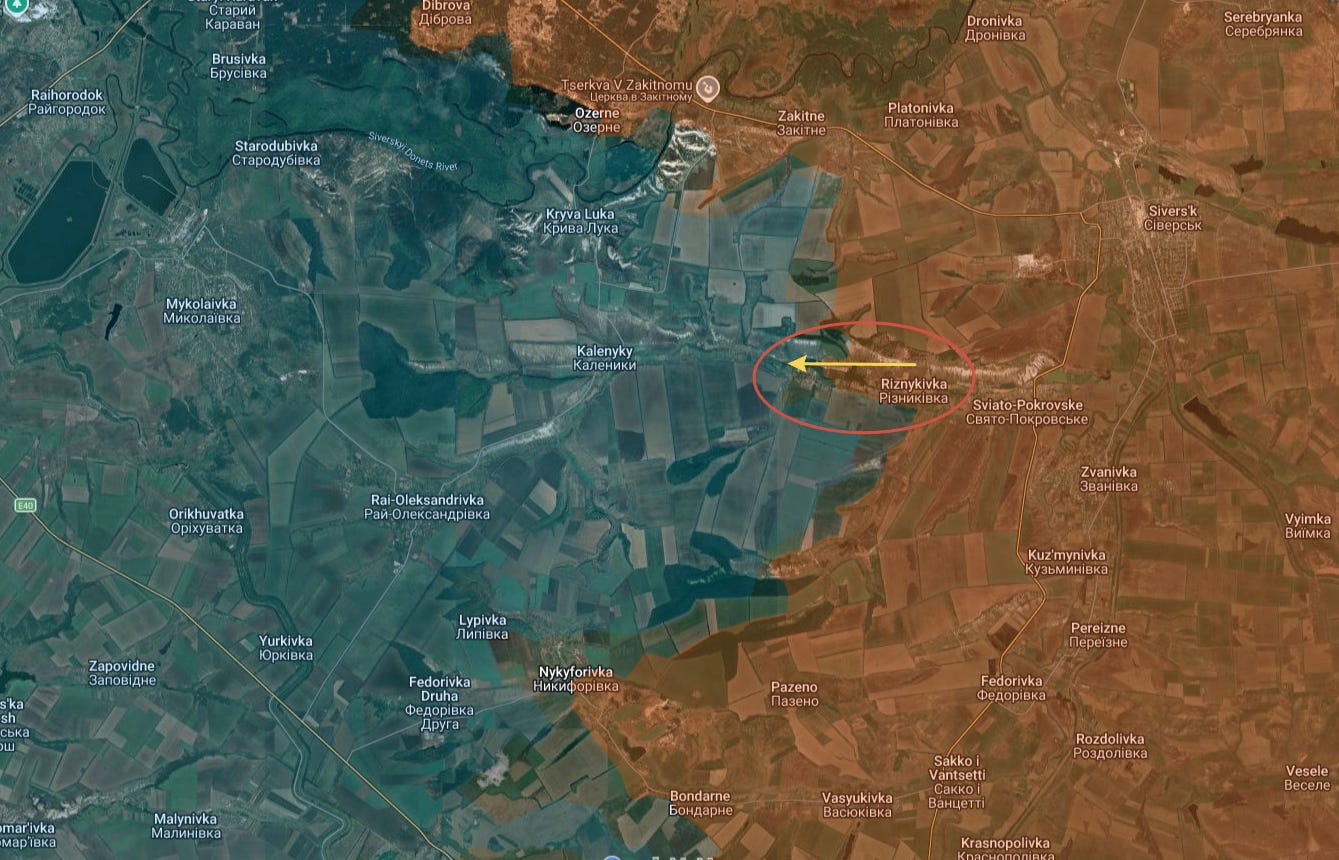
That entire mini “cauldron” between the two is essentially a gray zone that will likely entirely fall soon. Above you can see Russian forces advanced in Ryznykovka—here a close up:
In short, this entire ‘Chasov Yar line’ is shifting westward toward Kramatorsk, and it can be seen how much closer the line has moved to the key city:
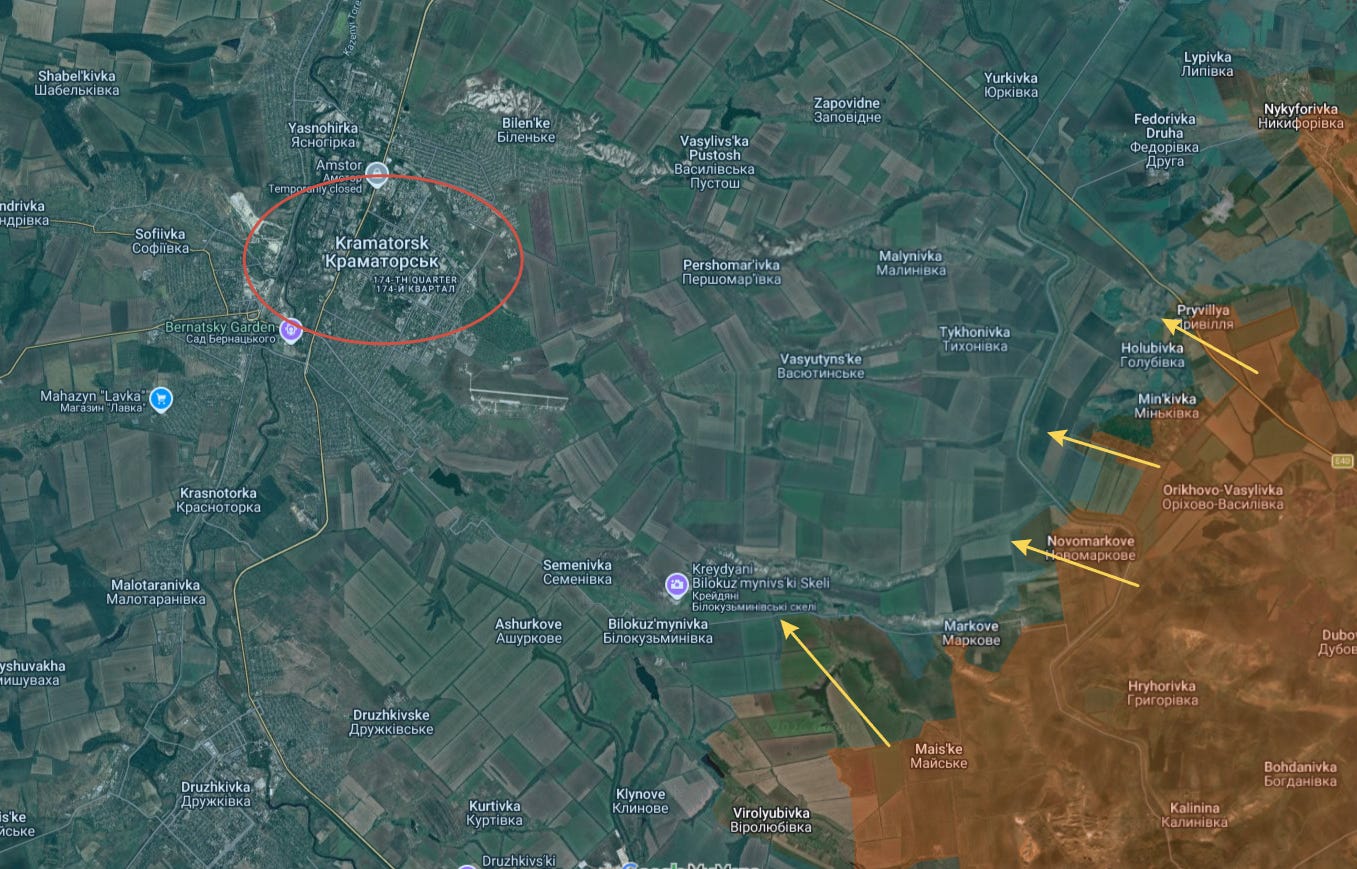
As can be seen, though the front is moving slow, there are not actually many settlements left between there and Kramatorsk—mostly open fields.
There are other small advances but nothing worth mentioning just to “fill space”. We’ll come back to them when more significant territory or settlements are captured.
Believe it or not, despite the “seeming” slowdown, statistics appear to show that January 2026 still saw the highest advance rate YoY of the war:
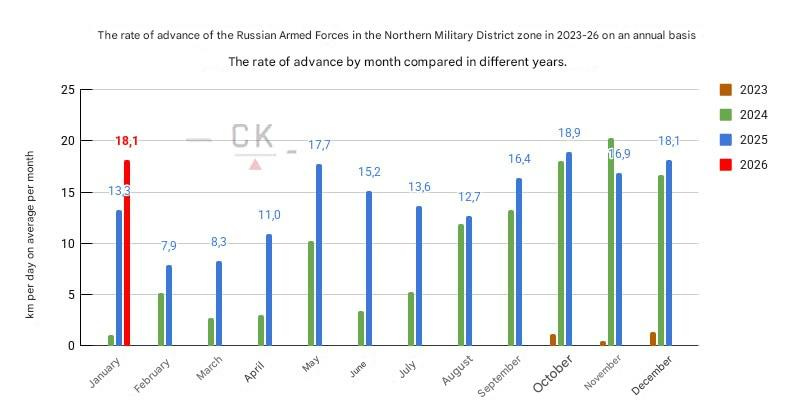
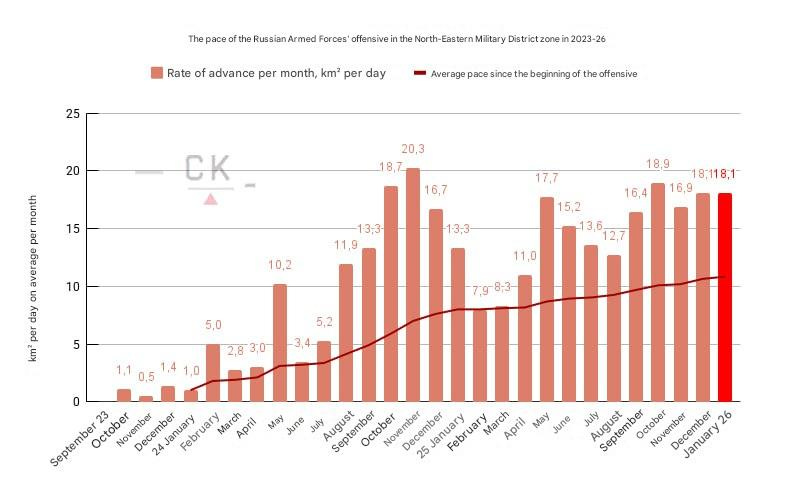
As a note—recall that on the first graph, the statistics for late 2024 are heavily skewed by Russia’s retaking of the Kursk region, which took place from about August 2024 until early 2025. In reality, barring that anomalous outlier, Russia’s “organic advances” and conquest of new territory (rather than retaking a big “screw-up”) have actually been growing significantly each year.
Again two days ago Russia struck Ukrainian energy targets with a fairly large attack, which of course itself came only two days after the “record-breaking” attack launched as soon as the phony “ceasefire” ended. I call it phony because it has now essentially been shown that Putin never agreed to any ceasefire but rather what happened was, Trump lied and the Kremlin merely “humored” him since they needed a few days to prepare the next strike package anyway. They saw it as an innocent bit of concession-making since it brought no harm, strengthened Trump—which serves the Kremlin’s interest—while not actually affecting the war effort in any way.
What’s interesting about this new strike is that we have a trove of BDA images—particular thanks to the AMK Mapping channel for collating them all (follow his X account here).
Thermal plants in Kiev and Kharkov were again targeted, with a 750 kV substation field in Vinnitsya also hit.
First is the Zmiivska TPP in Kharkov:
Satellite imagery shows significant damage to the Zmiivska Thermal Power Plant in Kharkiv Oblast, including the 330 kV and 110 kV substations, along with 4 of the generator transformers, as a result of Russia’s most recent combined missile attack.
5 craters from Iskander-M ballistic missiles are visible, which is 1 more impact than what I previously reported.
Notably, the TPP has halted all power generation.
Let’s compare the hits to Google maps of the plant, at 49.5835450145553, 36.52210475711416geolocation:
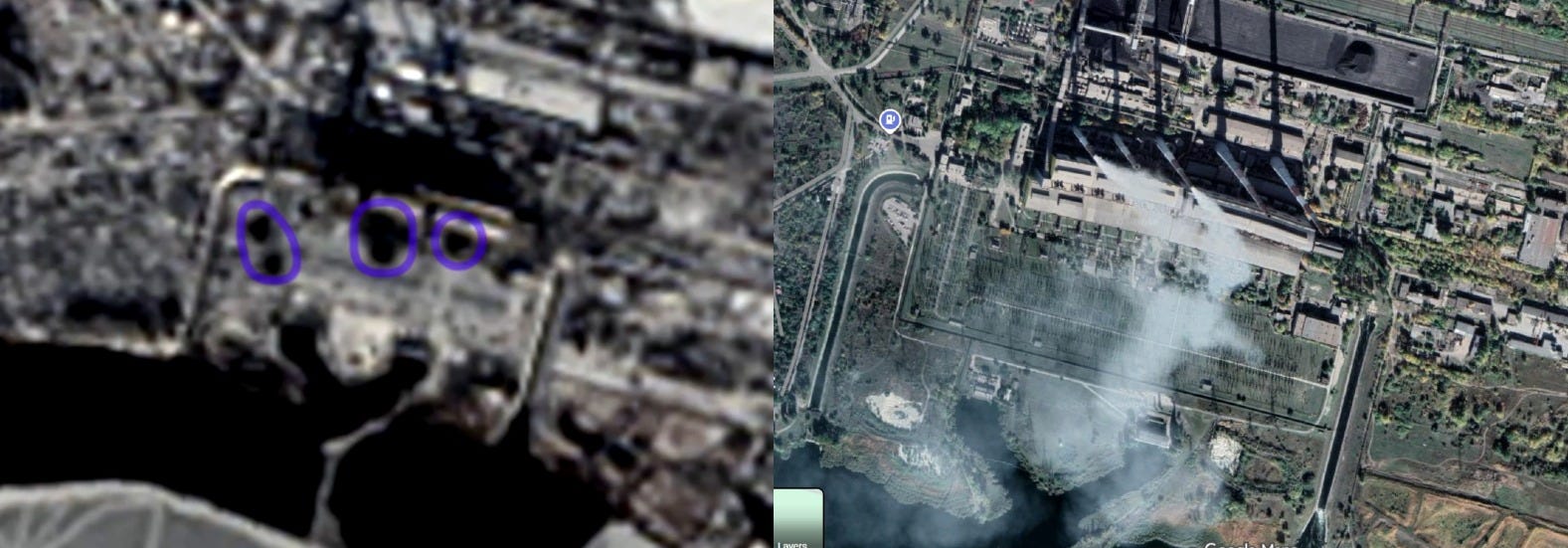
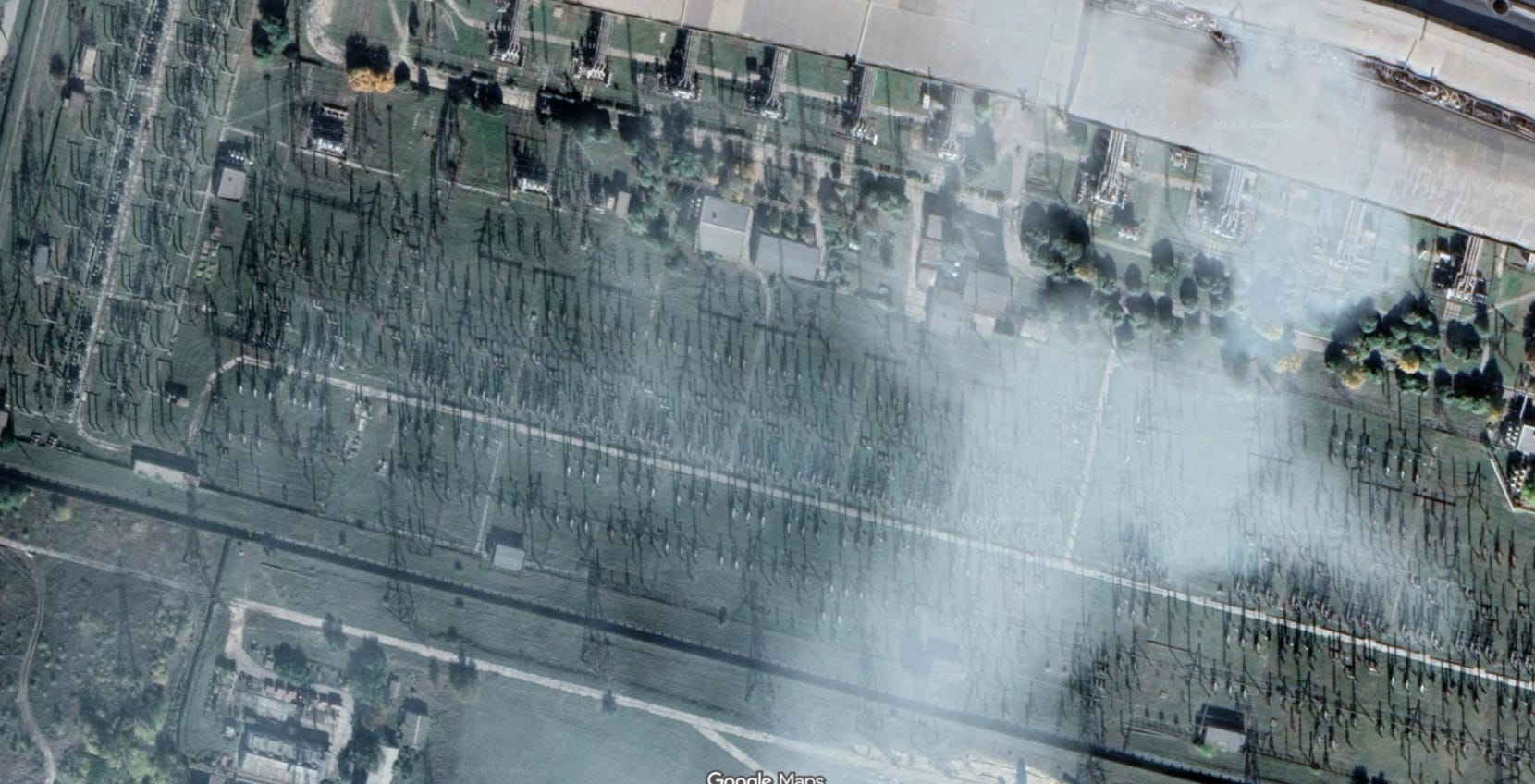
What we can see is that apparently most of the hits struck the big transformer substation field just outside of the plant—a close up:
Similarly, in Vinnitsya the substation field was hit:
Satellite imagery shows that the “Vinnytsya” 750 kV electrical substation was targeted in Russia’s most recent combined missile attack on Ukraine.
2 craters from Kh-101/Iskander-K cruise missiles are visible at the substation, while a third crater is seen in the neighbouring field ~390 metres away due to one of the missiles missing its target.
Coordinates: 49.165, 28.72248
The hits appear about here:
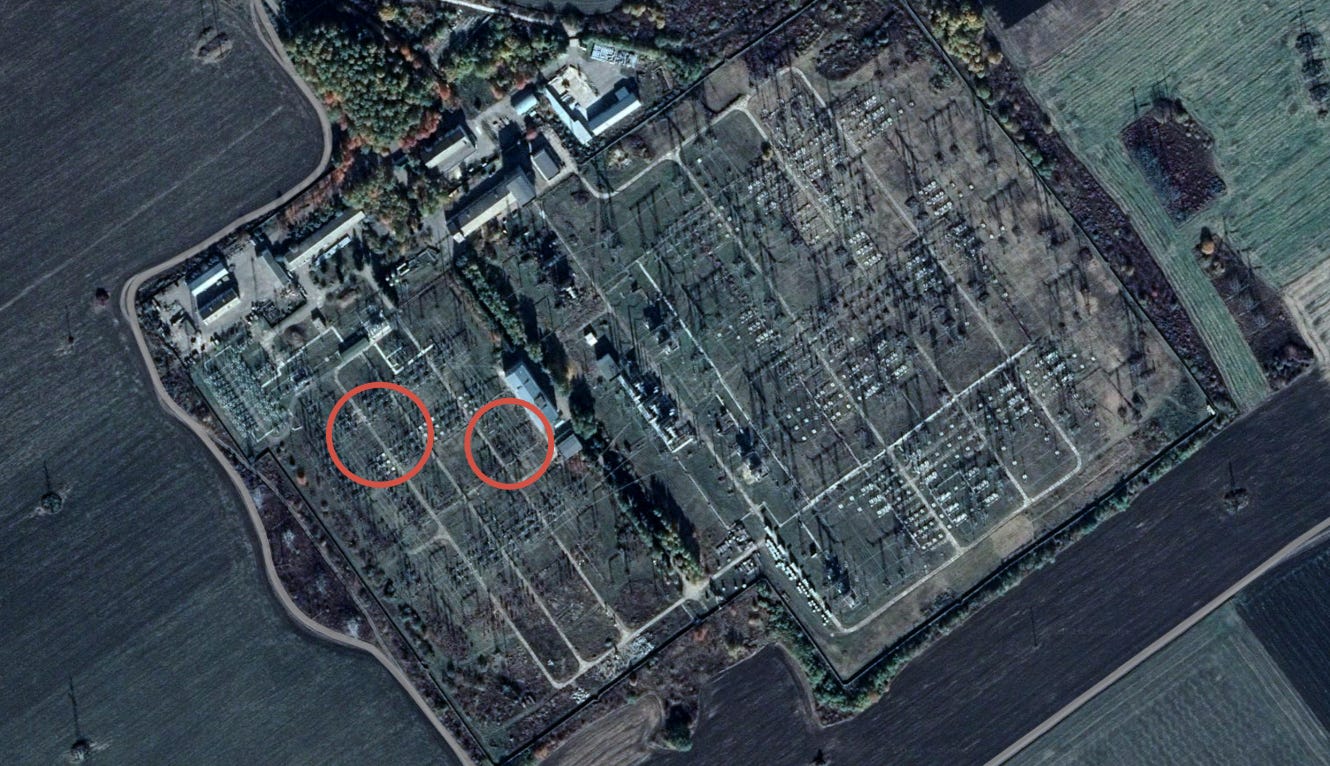
Remember when I said these large 750 kV fields would need dozens of missiles and hundredsof drones to entirely take out? You can see why.
Turning over to Kiev, we see the TPP-5 (Thermal Power Plant 5) was struck reportedly by Iskanders at 50.39325474093848, 30.56989136578839 geolocation:
Satellite imagery shows new damage to the CHP-5 Combined Heat and Power Plant in Kyiv, after it was hit by 4 Russian Iskander-M ballistic missiles in the most recent combined missile attack on Ukraine.
A large burn mark is visible, and it has entered an emergency shutdown mode.
This corresponds to the following hit area:
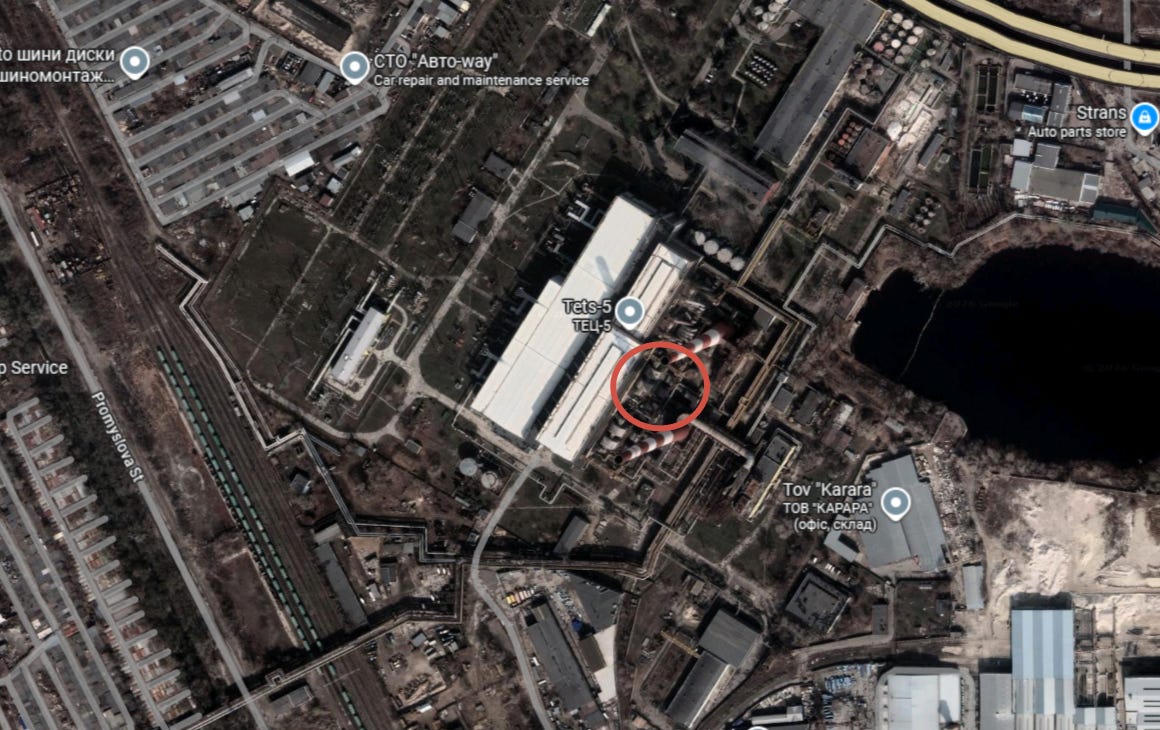
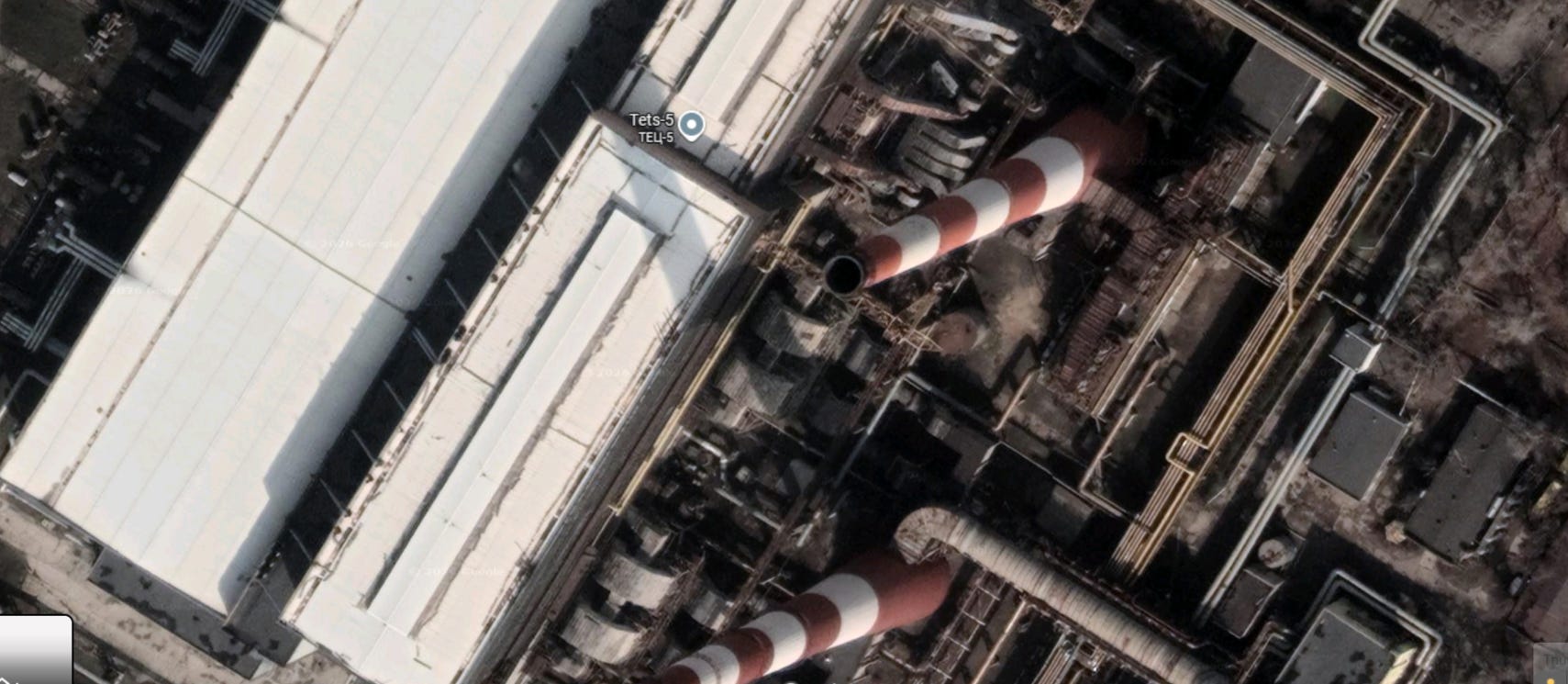
What’s interesting about this one is on a closer zoom we can see these appear to be massive turbines which were hit:
But TPP-5 was not the plant which fared the worst. TPP-4 in Darnytska district of Kiev was alleged to have been permanently put out of service according to several Ukrainian statements.
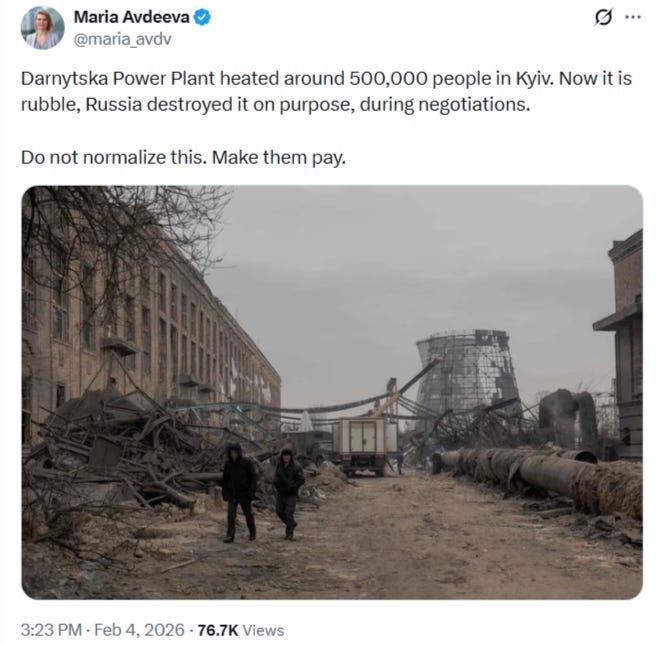
Rutti Fruitti Mark Rutte reported from the plant—which is at geolocation 50.44781824547086, 30.644984293087234—to show us the damage first hand:
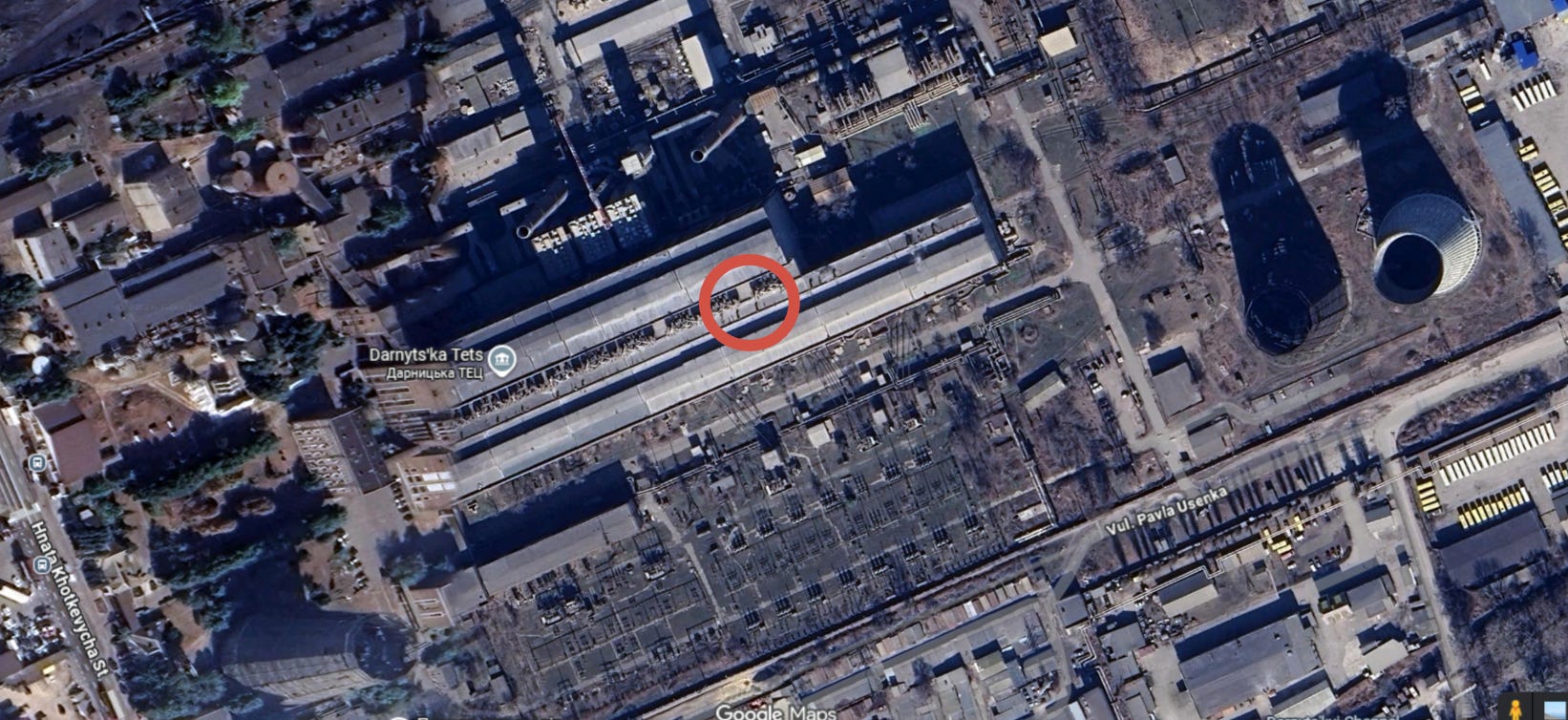
Satellite imagery shows new damage to the CHP-4 Combined Heat and Power Plant in Kyiv, after it was hit by 2 Iskander-M ballistic missiles
Both craters are visible in the red circle. The other craters in the imagery are from previous strikes.
As a result of the strikes, CHP-4 has entered an emergency shutdown mode.
The strike appears to correspond to somewhere here in the center:
Above video from Radio Svoboda.
Ukrainian investigative journalist Yuri Nikolov claims TPP-6 and 4 could be completely gone:
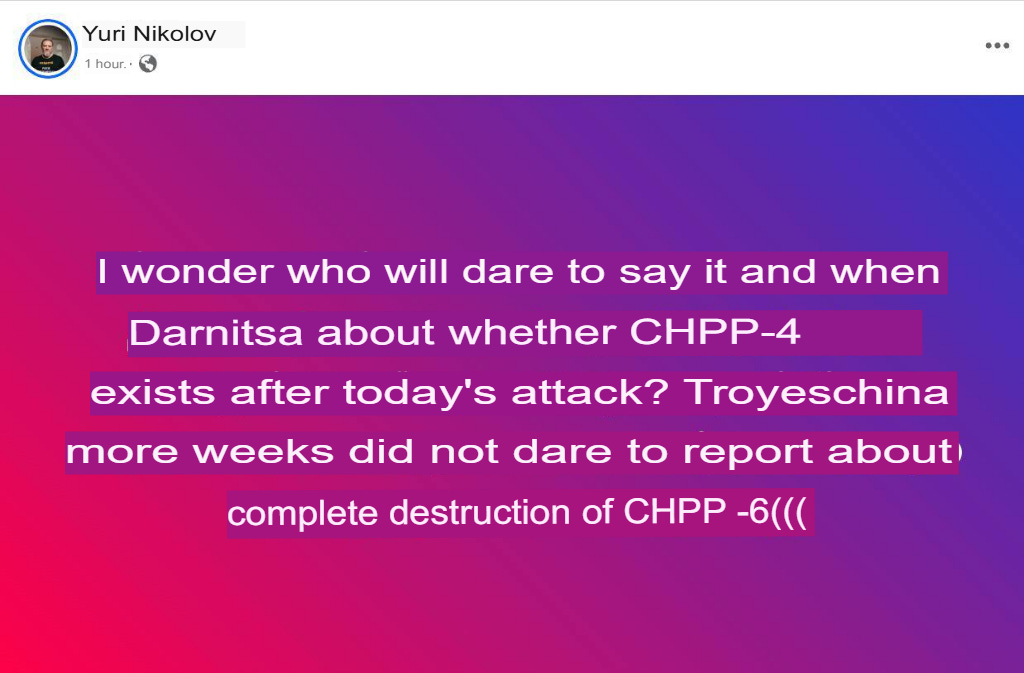
Ukrainian outlet Hromadske Radio quotes a Ukrainian infrastructure minister in writingthat TPP-4 is “almost completely destroyed”:
The Darnytsia CHPP in Kyiv is almost completely destroyed by enemy strikes, — Ukrainian Minister for Communities, Territories and Infrastructure Development Oleksiy Kuleba.
He reported the lack of heating in 1,146 homes as a result of the Russian shelling of energy infrastructure.
"They are currently heated exclusively by electricity. We understand and know all the problems these people are facing. We are constantly coordinating with the city of Kyiv regarding all their needs," Kuleba said during a visit by 60 ambassadors of foreign states to the Darnytsia thermal power plant site in the Ukrainian capital on Wednesday.
This CHPP served around 500,000 people in Kyiv, but since the start of the heating season, it has already been attacked five times with ballistic missiles and drones and is now almost completely destroyed.
"Today you are here after yesterday's attack, when the enemy directed 5 ballistic missiles here, aimed precisely at the only thing that remained operational here—this very equipment that was intended to supply heat to the population. This was done on the coldest night in Kyiv. The nighttime temperature reached -26 degrees. All of this has led to the fact that, as you can see today, the station is almost completely destroyed," he said.
According to Kuleba, the beginning of the restoration of this station has already started.“We have two days to technically understand when and to what extent we will be able to restore the operation of this station. After that, it will be possible to make some forecasts. As of today, it is still quite difficult to say anything,” he added.
In total, more than 20 missiles have hit the capital’s combined heat and power plants since the start of the heating season. During such attacks, the Russian occupiers use ballistic missiles with shrapnel, which destroy heat pipelines and complicate restoration work.
That said, you can see the minister claims the plant’s “restoration” is still planned—or rather, the analysis on whether it can be restored at all.
Lastly, the 750 kV substation at 50.493880929107966, 29.693279584170742 geolocation, which connects the Rivne nuclear power plant to Kiev, was again struck:
Satellite imagery shows new damage to the “Kyiv” 750 kV electrical substation after it was targeted by numerous Russian Kh-22/32 cruise missiles and Zircon hypersonic cruise missiles.
Notably, a number of craters and burn marks are visible outside the substation, indicating that some of the less accurate Kh-22 missiles were used alongside Kh-32s.
Damage is also seen to the substation itself in at least three locations due to missile impacts.
Comparison:
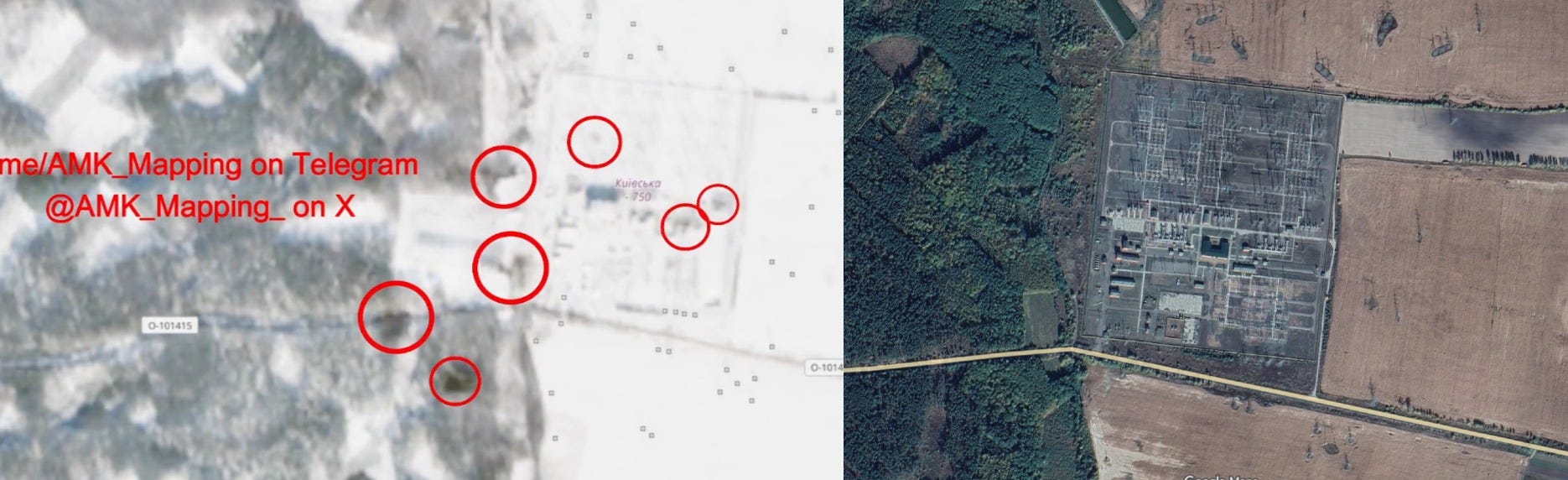
The claim that’s being inferred is that Russia used a variety of older missiles like Kh-22 which allegedly missed. This is possible, though it should be known the analysts here are merely guessing. They do not have direct knowledge of exactly what weapon system was used to strike. For all we know it could be drones which went off-course due to EW.
That said, the Kh-22 explanation would make logical sense for the following reason. It’s one of Russia’s largest warheads and would be ideal for such a large substation field, to knock out as many transformers as possible. However, the missile was designed as an anti-ship missile and uses terminal radar guidance to lock onto a ship. This form of guidance is not designed to be used on a terrestrial target of this sort, which means the missile may be programmed only to use its INS, or inertial navigation/guidance system—basically, a gyroscope. The older Soviet gyroscope alone would likely not have great accuracy, as it was never designed to be used by itself—though perhaps Oreshnik recently did have something to say about that.
Of course, it’s also plausible that some missiles got shot down in the final terminal descent and therefore struck somewhere “nearby” after falling. But those would likely not be Kh-22, which we have learned are essentially immune to being shot down.
Either way, you can still see how such strikes are not ‘end-all-be-all’ and why Ukraine continues to have working power. There appears to be three successful hits inside the gigantic substation field, corresponding to roughly the circles below:
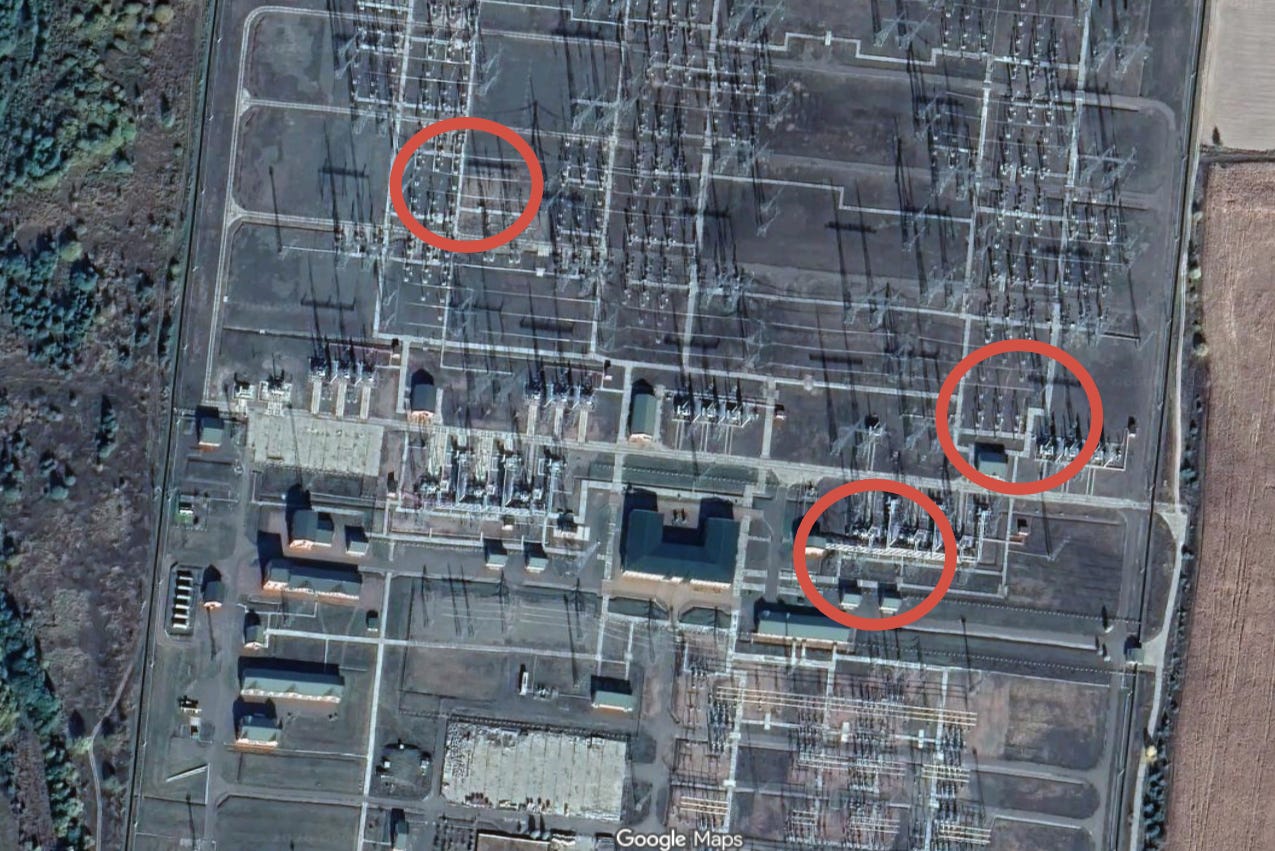
This may have taken out a small handful of transformers which is a fraction of the total amount available there.
Some even argue that despite the massive Russian strikes since the start of the new year, Ukraine’s overall power continues to hold up decently well, and is even being restored—at least going by this chart:
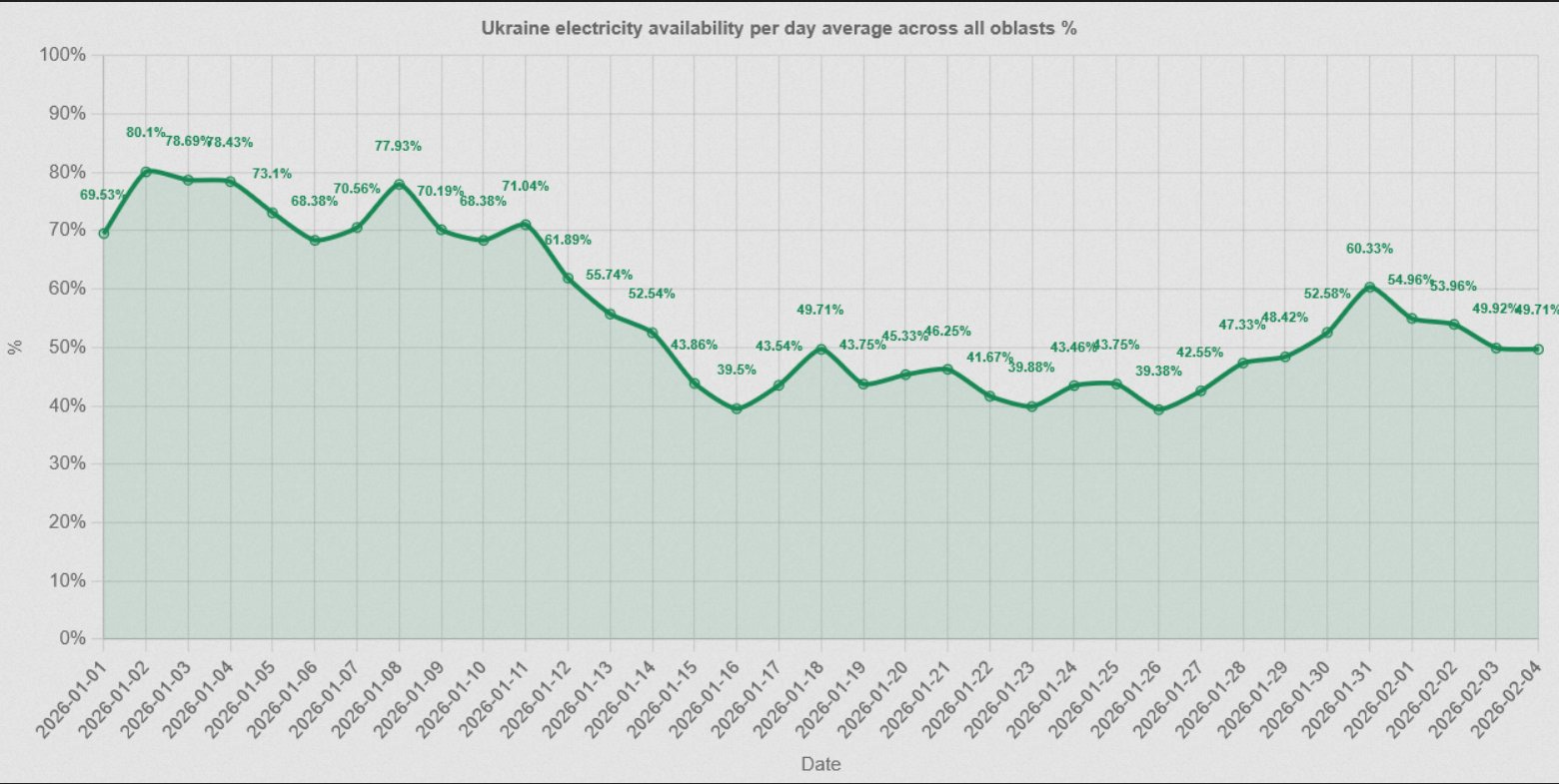
Though I’d say a steep drop off from 80% to 40-50% in a single month is pretty drastic—but it doesn’t signify a total eradication of Ukraine’s grid.
In some of the last strikes, Russia has continued to use record numbers of Iskanders. Reports indicate this is due to a major surge in Russian Iskander production:
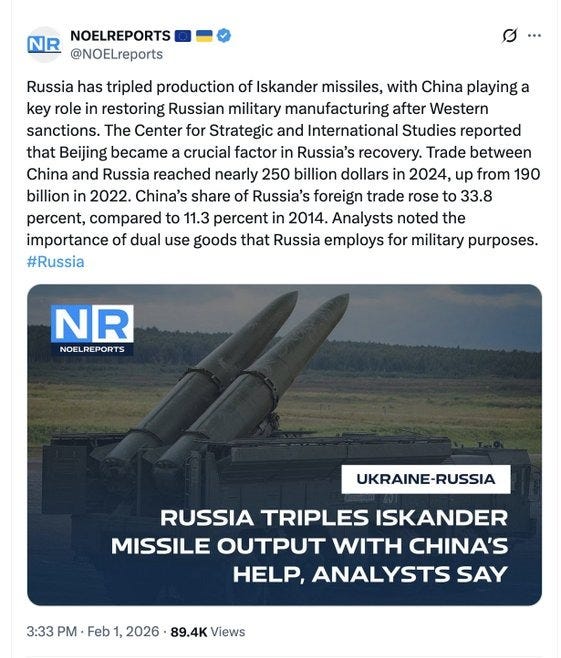
The above CSIS report claims China is entirely behind the boost:
In the defense sector, China has significantly increased exports to Russia of “high-priority items,” a set of 50 dual-use goods that include computer chips, machine tools, radars, and sensors that Russia needs to sustain its war efforts.49 While Russia lacks the capacity to produce many of these goods in sufficient quantities, China’s massive manufacturing sector can produce a number of them at scale.50 Chinese exports helped Russia triple its production of Iskander-M ballistic missiles from 2023 to 2024, which Russia has used to pound Ukrainian cities.51 In addition, China accounted for 70 percent of Russia’s imports of ammonium perchlorate in 2024, an essential ingredient in ballistic missile fuel.52 China has also provided Russia with drone bodies, lithium batteries, and fiber-optic cables—the critical components for fiber-optic drones used in Ukraine, which can bypass electronic jamming.53
Your support is invaluable. If you enjoyed the read, I would greatly appreciate if you subscribed to a monthly/yearly pledge to support my work, so that I may continue providing you with detailed, incisive reports like this one.
Alternatively, you can tip here: buymeacoffee.com/Simplicius